
Your car’s brakes are undoubtedly one of the most critically important components. You don’t have to become a technical expert in all things automotive to understand that your brakes need to be in perfect working order at all times, but that doesn’t mean you shouldn’t take time to learn about common problems that affect them. One such issue is brake pad delamination, and that will be the core subject of today’s blog.
What is Brake Pad Delamination?
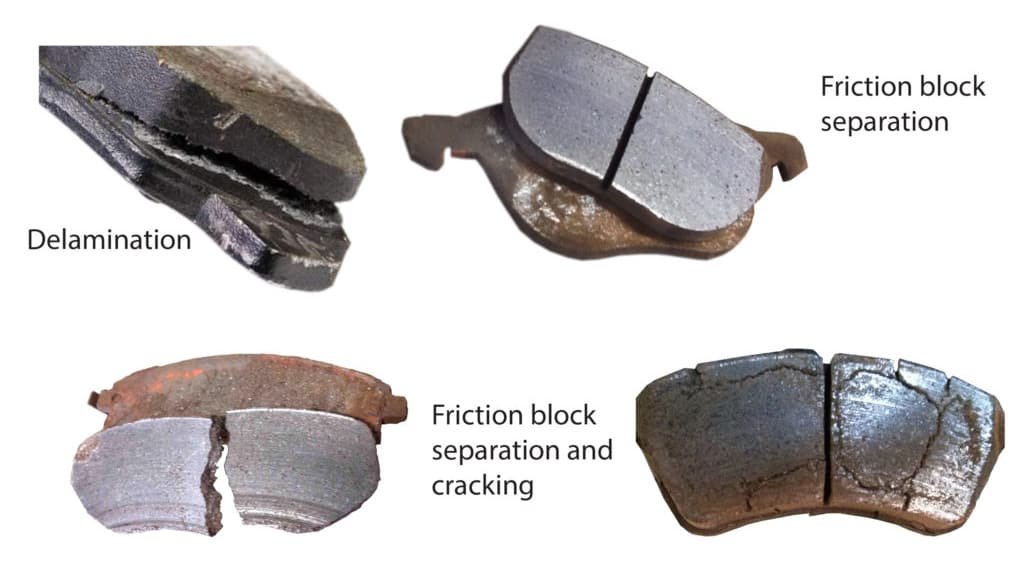
In simple terms, brake pad delamination is where the friction material component of the brake pad has separated from the steel backing plate. It’s not necessarily a problem that occurs on older brake pads but can also occur on newer ones where there is still a significant amount of friction material still on them.
To use a more everyday analogy, imagine if your footwear suddenly lost its sole. It would make them pretty useless and uncomfortable, wouldn’t it? Well imagine how potentially useless and even dangerous a brake pad is once the friction material has separated from the backing steel plate, and you’ll get close to seeing what a serious problem this really is.
What Are the Causes of Brake Pad Delamination?
One of the reasons for the friction material falling off the disc brake plate is the excessive rust build-up between the backing plate and the friction, causing what’s known as “rust jacking”. This is becoming more of an issue because friction manufacturers are using low-grade black steel, which contains a layer of oxides. This layer, if not properly removed, will be trapped under the friction layer during the manufacturing process. These oxides turn to rust and cause separation between the disc brake plate and the friction (rust jacking), which eventually leads to the friction falling off. This is obviously a major safety concern!
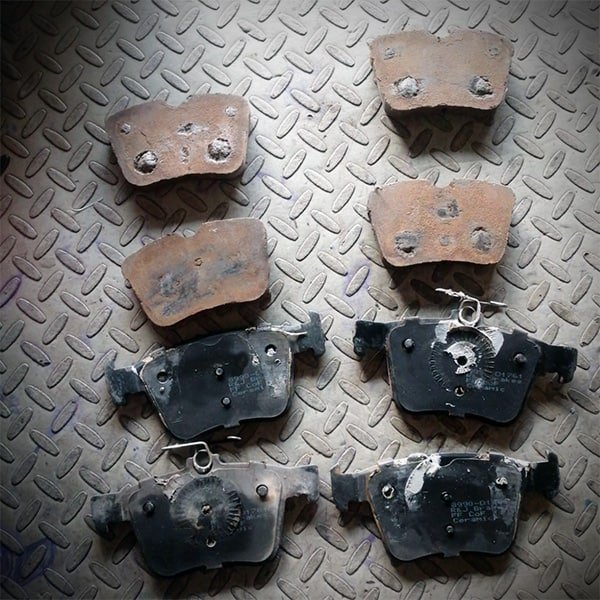
Another problem that’s related to rust is excess moisture on the brake pad backing plate which when oxidized will lead to excessive amounts of rust. Why moisture can embed into the friction materials and cause corrosion? Some brake pads manufacturer has no good formulation and positive molding technology, they are also cutting corners, which will lead to the low density of friction materials and there are lots of pores and cracks in the materials, making moisture easy to embed. The corrosion removes the essential bond between the friction material and the backing plate, causing it to slip and drag. Those who are driving in the rain and/or in snow may experience this if moisture is allowed to linger, and vehicles in humid climates and in coastal areas are more susceptible to this potential problem.
Finally, the other chief cause of brake pad delamination is short of under-layer. underlayer between steel plate and friction material can promote better friction to plate adhesion, another function is acting as a thermal barrier by minimizing the heat transfer from the pad into the caliper, reducing the possibility of fluid boil.
How to Avoid Brake Pad Delamination
The best way to avoid brake pad delamination is to invest in high-quality brake pads that are made to meet the most stringent international safety and manufacturing standards. Most reputable OEMs will use such brakes, and it’s mostly in the aftermarket you have to be more careful. Look for those who point to the specific materials and processes they use that prove the formulation and backing plate is made to the best-possible quality.
You should also be sure to keep your brakes dry and moisture-free as much as possible and that will also contribute to better brake health.